

Heavy haulage is a critical backbone of construction and mining operations across Western Australia. From transporting oversized plant and machinery to moving bulk materials across long distances, heavy haulage enables projects to progress safely, efficiently, and on schedule. Without a clear understanding of the requirements involved, however, heavy haulage can quickly become a source of delays, compliance risks, and unnecessary costs.
Western Australia’s vast geography, diverse terrain, and strong focus on safety mean that heavy haulage is subject to strict regulatory and operational standards. Construction and mining companies must navigate these requirements carefully to ensure lawful operations while maintaining productivity.
This article provides a practical, contractor-focused guide to heavy haulage requirements in Western Australia. It explains what heavy haulage involves, why compliance matters, and how best practices in planning and execution support successful construction and mining projects.
What Is Heavy Haulage?
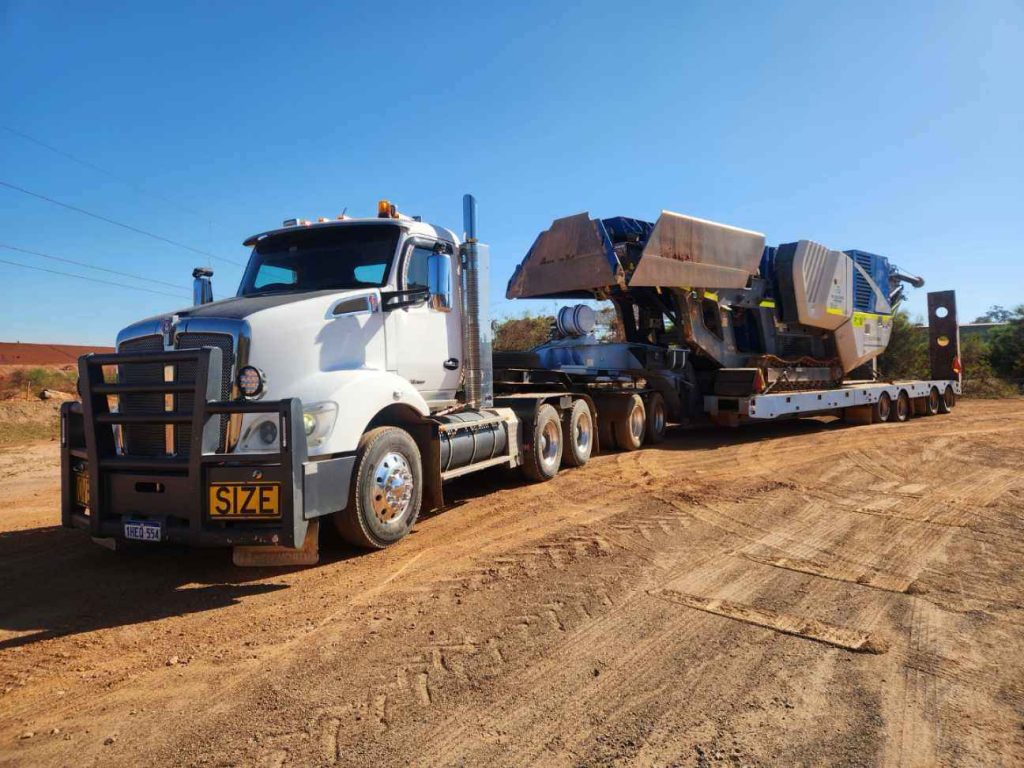
Heavy haulage refers to the transport of large, heavy, or oversized loads that exceed standard vehicle mass or dimension limits. In construction and mining projects, these loads often include:
-
Earthmoving equipment
-
Crushers, screeners, and processing plant
-
Structural components
-
Bulk materials such as aggregates, soil, and waste
-
Prefabricated modules and infrastructure elements
Because of their size and weight, these loads require specialised vehicles, experienced operators, and detailed planning.
Why Heavy Haulage Is Essential in WA Construction and Mining
Western Australia hosts some of the largest and most remote construction and mining projects in the country. Sites are often located far from ports, processing facilities, and population centres, making transport logistics a critical success factor.
Heavy haulage supports:
-
Timely delivery of critical equipment
-
Efficient movement of bulk materials
-
Reduced downtime on site
-
Safe and controlled transport over long distances
Without reliable heavy haulage, even well-planned projects can face significant operational disruptions.
Regulatory Environment for Heavy Haulage in Western Australia
Heavy haulage operations in WA are governed by road safety, transport, and environmental regulations. These rules are designed to protect public infrastructure, road users, and the environment while ensuring safe movement of oversized and overweight loads.
Key regulatory considerations include:
-
Vehicle mass and dimension limits
-
Route approvals and access conditions
-
Load restraint and vehicle standards
-
Operator licensing and compliance
-
Environmental and community impacts
Official guidance on transport and infrastructure requirements can be accessed through government resources such as https://www.wa.gov.au, which provides information on transport regulation and road use across the state.
Understanding Oversize and Overmass Loads
Heavy haulage loads are commonly classified as either oversize, overmass, or both.
Oversize Loads
Loads that exceed standard width, height, or length limits. These often require special route planning, signage, and in some cases, escort vehicles.
Overmass Loads
Loads that exceed standard axle or gross vehicle mass limits. These loads must comply with specific mass management and infrastructure protection requirements.
Understanding these classifications is essential, as they determine permit requirements and operational conditions.
Permits and Approvals: A Core Requirement
Most heavy haulage operations in WA require permits or approvals before transport begins. These permits define:
-
Approved routes
-
Travel times and restrictions
-
Vehicle and load conditions
-
Safety and escort requirements
Failure to obtain or comply with permits can result in fines, project delays, and suspension of transport activities.
Permit planning should be integrated early into project schedules to avoid last-minute disruptions.
Route Planning and Infrastructure Protection
Route planning is one of the most critical aspects of heavy haulage. Western Australia’s road network includes highways, local roads, bridges, and remote access routes, each with different load-bearing capacities.
Effective route planning considers:
-
Road and bridge load limits
-
Turning radii and clearance constraints
-
Traffic volumes and safety risks
-
Environmental sensitivities
-
Community impacts
Careful planning reduces the risk of infrastructure damage and ensures safe, efficient transport.
Safety Obligations in Heavy Haulage Operations
Safety is central to heavy haulage requirements in Western Australia. Due to the size and weight of loads, even minor incidents can have serious consequences.
Safety responsibilities include:
-
Proper load restraint
-
Vehicle maintenance and inspection
-
Qualified and experienced drivers
-
Use of pilot or escort vehicles where required
-
Clear communication and coordination
Strong safety practices protect workers, road users, and project timelines.
Environmental and Community Considerations
Heavy haulage operations can affect local communities and the environment, particularly when moving through regional or urban areas.
Best practices include:
-
Minimising noise and disruption
-
Managing dust and emissions
-
Scheduling movements to avoid peak traffic
-
Protecting roadside environments
Responsible operators recognise that community and environmental stewardship is part of compliance and reputation management.
Bulk Transport in Construction and Mining Projects
In addition to oversized equipment, heavy haulage often involves bulk transport of materials such as aggregates, soil, and construction waste. These materials must be moved efficiently to maintain site productivity.
Bulk transport considerations include:
-
Consistent supply and removal cycles
-
Load stability and containment
-
Integration with site operations
-
Compliance with mass limits
Professional bulk transport services ensure materials are moved safely and efficiently across WA’s long distances.
The Role of Professional Heavy Haulage Providers
Heavy haulage is a specialised discipline that requires technical expertise, compliant equipment, and detailed planning. Partnering with experienced providers reduces risk and improves project outcomes.
Professional heavy haulage services offer:
-
Regulatory knowledge and permit management
-
Purpose-built vehicles and trailers
-
Skilled operators and logistics teams
-
Integrated transport solutions
For construction and mining projects seeking reliable solutions, specialist services are available through providers such as:
https://peelresource.com.au/service/heavy-haulage-bulk-transport-western-australia/
Engaging professional services allows project teams to focus on core construction and mining activities while transport is managed safely and compliantly.
Risk Management Through Compliance
Non-compliance in heavy haulage can result in significant consequences, including:
-
Enforcement action and fines
-
Damage to public infrastructure
-
Project delays and cost overruns
-
Reputational damage
By adhering to heavy haulage requirements, companies reduce operational risk and demonstrate professional standards expected in the WA construction and mining sectors.
Planning Heavy Haulage as Part of Project Strategy
Successful projects treat heavy haulage as a strategic element rather than an afterthought. Early integration into project planning ensures:
-
Realistic scheduling
-
Accurate budgeting
-
Reduced downtime
-
Improved coordination with site works
This proactive approach supports smoother project delivery, particularly on complex or remote sites.
Adapting to Western Australia’s Unique Conditions
Western Australia’s scale and geography present unique challenges for heavy haulage. Long distances, regional roads, and variable weather conditions all influence transport planning.
Best practice responses include:
-
Allowing for extended travel times
-
Planning contingencies for weather impacts
-
Ensuring vehicle reliability in remote areas
-
Coordinating with local authorities where required
Understanding local conditions is essential for safe and efficient haulage.
Heavy Haulage and Project Efficiency
When executed correctly, heavy haulage contributes directly to project efficiency by:
-
Reducing equipment idle time
-
Ensuring timely material delivery
-
Supporting continuous site operations
-
Minimising unplanned disruptions
Efficient transport logistics are a competitive advantage in Western Australia’s construction and mining sectors.
Future Trends in Heavy Haulage
As projects grow in scale and complexity, heavy haulage requirements continue to evolve. Increasing focus on safety, environmental performance, and efficiency is shaping industry expectations.
Companies that invest in compliant, professional haulage solutions are better positioned to meet future regulatory and operational demands.
Conclusion
Understanding heavy haulage requirements is essential for construction and mining projects across Western Australia. From regulatory compliance and safety obligations to route planning and bulk transport efficiency, heavy haulage plays a central role in successful project delivery.
By planning early, prioritising safety, and working with experienced heavy haulage providers, project teams can reduce risk, control costs, and ensure smooth operations across WA’s diverse landscapes.
Heavy haulage is more than transport—it is a strategic component of construction and mining success in Western Australia.
Related posts:
 Heavy Haulage: Ensuring Safe and Efficient Transport for Modern Industries
 Heavy Haulage Services from Perth to Augusta: Safe, Timely, and Cost-Effective
 Reliable Construction Material Supply from Perth to Augusta: Sand, Roadbase, Aggregates
 The Essential Role of Crushing and Screening in Modern Resource Recovery
 Comprehensive Crushing and Screening Solutions Across Western Australia from Margaret River to Augusta