


Major civil projects are complex by nature. From large-scale roadworks and infrastructure upgrades to mining developments and industrial construction, these projects rely on the seamless movement of heavy machinery, oversized equipment, and bulk materials. In Western Australia, where distances are vast and operating conditions vary significantly, heavy haulage is not just a logistical task—it is a critical operational function that directly affects safety, timelines, and overall project success.
Professional heavy haulage services play a central role in ensuring that civil projects move forward without unnecessary disruption. When transport is managed correctly, sites operate more efficiently, risks are reduced, and compliance obligations are met with confidence. This article explores how professional heavy haulage services improve both safety and efficiency on major civil projects, particularly within the Western Australian context.
The Growing Complexity of Major Civil Projects
Civil projects today are larger, more technically demanding, and more tightly regulated than ever before. Contractors must coordinate multiple workstreams, manage strict schedules, and comply with safety and environmental standards—all while operating under commercial pressure to deliver results.
Transport logistics sit at the intersection of these challenges. Every delay in equipment delivery or material movement can cause knock-on effects across the project. This is why professional heavy haulage is increasingly viewed as a strategic partner rather than a simple transport solution.
What Defines Professional Heavy Haulage Services?
Professional heavy haulage services go beyond moving loads from one point to another. They encompass a full-service approach that includes planning, compliance, risk management, and execution.
Key characteristics of professional heavy haulage include:
-
Purpose-built vehicles and trailers designed for heavy and oversized loads
-
Experienced drivers trained in complex haulage operations
-
Detailed route planning and risk assessment
-
Compliance with transport, safety, and environmental regulations
-
Coordination with project managers and site teams
This level of professionalism is essential for major civil projects where margins for error are minimal.
Safety as the Primary Priority
Safety is the most significant factor influencing heavy haulage requirements. Oversized and overmass loads introduce unique risks, including vehicle instability, infrastructure damage, and hazards to other road users.
Professional heavy haulage services enhance safety by implementing robust control measures at every stage of the transport process.
Load Management and Restraint
Proper load restraint is fundamental to safe haulage. Professional operators ensure that:
-
Loads are evenly distributed
-
Securing methods are appropriate for the load type
-
Equipment is inspected before departure
These practices significantly reduce the risk of load shift or failure during transit.
Experienced Drivers and Operational Expertise
Driver experience is a critical safety factor in heavy haulage. Professional services employ operators who understand:
-
Vehicle dynamics under heavy load
-
Safe manoeuvring on tight or uneven routes
-
Emergency response procedures
This expertise is particularly valuable on long-distance routes and in regional or remote areas of Western Australia.
Route Planning and Risk Reduction
Route planning is a core element of professional heavy haulage. Civil projects often require transport through a mix of highways, local roads, and access routes, each with different limitations.
Professional haulage teams assess:
-
Road and bridge load capacities
-
Clearance constraints
-
Traffic conditions and community impacts
-
Environmental sensitivities
Effective route planning reduces accident risk and protects public infrastructure while ensuring predictable delivery schedules.
Compliance with Regulatory Requirements
Heavy haulage in Western Australia is subject to strict regulatory oversight. These regulations are designed to protect public safety and infrastructure while ensuring responsible transport operations.
Professional heavy haulage services manage compliance by:
-
Securing necessary permits and approvals
-
Adhering to mass and dimension limits
-
Following approved routes and conditions
-
Maintaining vehicle and operator compliance
Official information on transport and safety obligations is available through government resources such as https://www.wa.gov.au, which outlines regulatory frameworks relevant to heavy transport operations.
Improving Efficiency Through Professional Planning
Efficiency on civil projects depends heavily on timing and coordination. Professional heavy haulage services improve efficiency by integrating transport planning with project schedules.
This integration allows:
-
Timely delivery of equipment and materials
-
Reduced idle time on site
-
Better coordination with construction activities
When transport aligns with project milestones, productivity increases across the board.
Minimising Project Delays
Delays caused by transport issues can be costly. Missed delivery windows, unplanned route changes, or compliance issues can halt work on site.
Professional heavy haulage providers mitigate these risks through:
-
Detailed pre-transport planning
-
Contingency strategies for weather or road conditions
-
Clear communication with project stakeholders
This proactive approach keeps projects moving even when conditions change.
Supporting Large and Oversized Equipment Transport
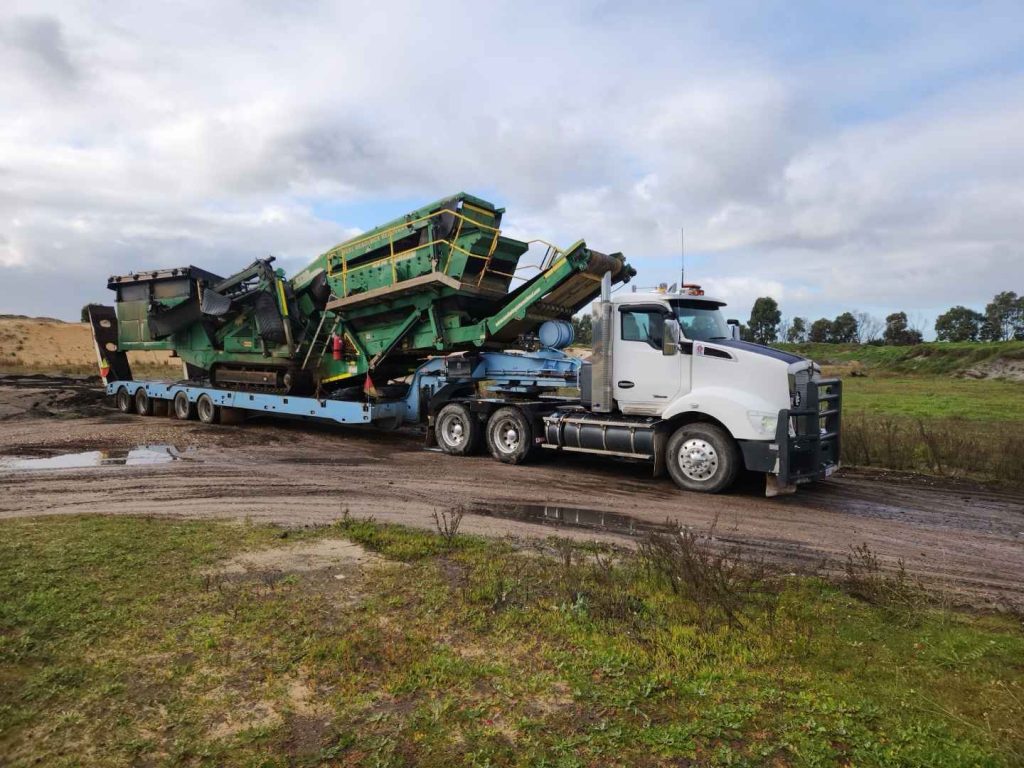
Major civil projects often involve transporting large plant and machinery that cannot be broken down into smaller components. This includes crushers, screeners, excavators, and modular infrastructure elements.
Professional heavy haulage services are equipped to handle these challenges by:
-
Using specialised trailers and configurations
-
Managing escort and pilot vehicle requirements
-
Coordinating safe loading and unloading procedures
This capability ensures that critical equipment arrives ready for immediate use.
Enhancing Safety for Other Road Users
Heavy haulage operations share public roads with everyday traffic. Professional services take additional measures to protect other road users, including:
-
Clear signage and visibility measures
-
Escort vehicles where required
-
Travel scheduling to avoid peak traffic periods
These measures reduce the likelihood of incidents and demonstrate responsible transport practices.
Environmental and Community Considerations
Major civil projects often operate near communities or sensitive environments. Professional heavy haulage services factor these considerations into planning and execution.
Best practices include:
-
Minimising noise and disruption
-
Managing dust and emissions
-
Respecting local access and traffic conditions
Responsible transport supports project approval processes and long-term community relationships.
Bulk Transport and Material Efficiency
In addition to equipment, heavy haulage often involves bulk transport of construction materials such as aggregates, soil, and waste. Efficient bulk transport is essential for maintaining site productivity.
Professional services ensure:
-
Consistent material flow
-
Compliance with mass limits
-
Safe loading and unloading
This reliability supports uninterrupted construction progress.
Integrated Heavy Haulage Solutions
Professional heavy haulage services often form part of a broader logistics and resource management solution. This integrated approach simplifies coordination and reduces administrative burden for project teams.
For civil projects requiring reliable transport solutions, specialised services are available through providers such as:
https://peelresource.com.au/service/heavy-haulage-bulk-transport-western-australia/
By centralising transport under experienced management, projects benefit from streamlined operations and reduced risk.
Cost Control Through Efficiency and Risk Reduction
While professional heavy haulage services represent an investment, they often deliver cost savings over the life of a project. Reduced delays, fewer incidents, and improved efficiency translate into better cost control.
Avoiding compliance breaches and infrastructure damage also protects project budgets from unexpected expenses.
Adapting to Western Australia’s Conditions
Western Australia’s geography presents unique challenges, including long travel distances, variable road conditions, and remote project locations. Professional heavy haulage providers understand these conditions and plan accordingly.
This local knowledge ensures:
-
Reliable delivery timelines
-
Vehicle suitability for terrain
-
Effective response to changing conditions
Such adaptability is critical for large-scale civil works.
Heavy Haulage as a Strategic Project Partner
On major civil projects, heavy haulage should be viewed as a strategic partner rather than a standalone service. Early involvement in project planning allows haulage considerations to be addressed before construction begins.
This proactive approach improves safety outcomes, enhances efficiency, and supports overall project success.
Future Expectations for Heavy Haulage in Civil Construction
As civil projects continue to grow in scale and complexity, expectations around safety, compliance, and efficiency will increase. Professional heavy haulage services are well positioned to meet these demands through ongoing investment in people, equipment, and systems.
Projects that prioritise professional transport solutions are better prepared for future regulatory and operational challenges.
Conclusion
Professional heavy haulage services play a vital role in improving safety and efficiency on major civil projects across Western Australia. Through experienced operators, rigorous planning, regulatory compliance, and integrated logistics, these services reduce risk and support consistent project delivery.
In an environment where delays and incidents can have significant consequences, investing in professional heavy haulage is a practical and strategic decision. For civil construction projects aiming to operate safely, efficiently, and responsibly, professional heavy haulage is not optional—it is essential.
Related posts:
 Understanding Heavy Haulage Requirements for Construction and Mining Projects in Western Australia
 Heavy Haulage: Ensuring Safe and Efficient Transport for Modern Industries
 Heavy Haulage Services from Perth to Augusta: Safe, Timely, and Cost-Effective
 Reliable Construction Material Supply from Perth to Augusta: Sand, Roadbase, Aggregates
 The Essential Role of Crushing and Screening in Modern Resource Recovery